


| Place of Origin | Shandong, China |
|
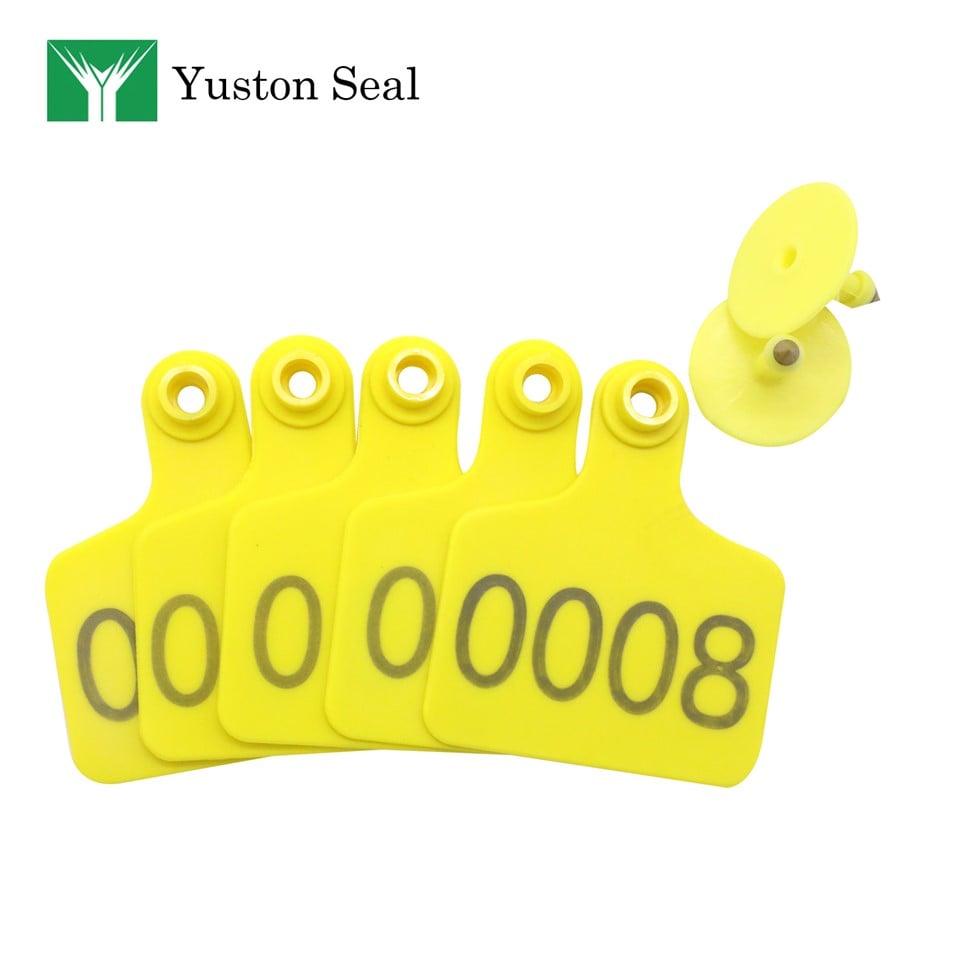
| Model Number | YTET014 Ear Tag | |
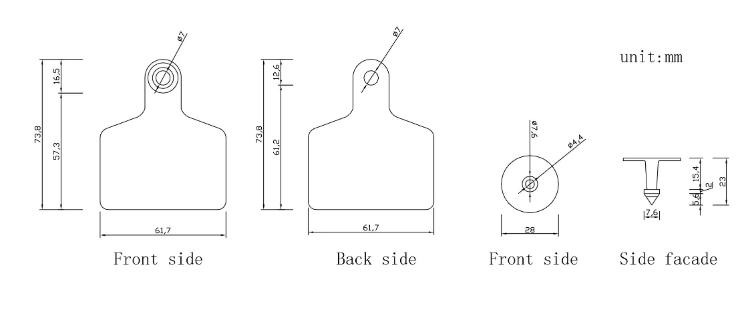
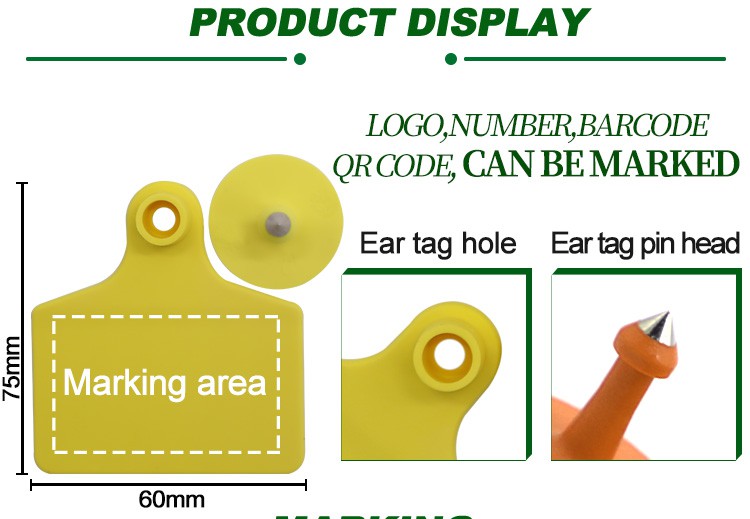
| Size | 62*70mm | |
| Packing size | 53*32*14cm | |
| Material | TPU | |
| Use | Pig, cattle, sheep, cow, goat, etc | |
| Application | Livestock Management | |
| MOQ | 100pcs | |
| Color | Customized Color |
Ear Tag
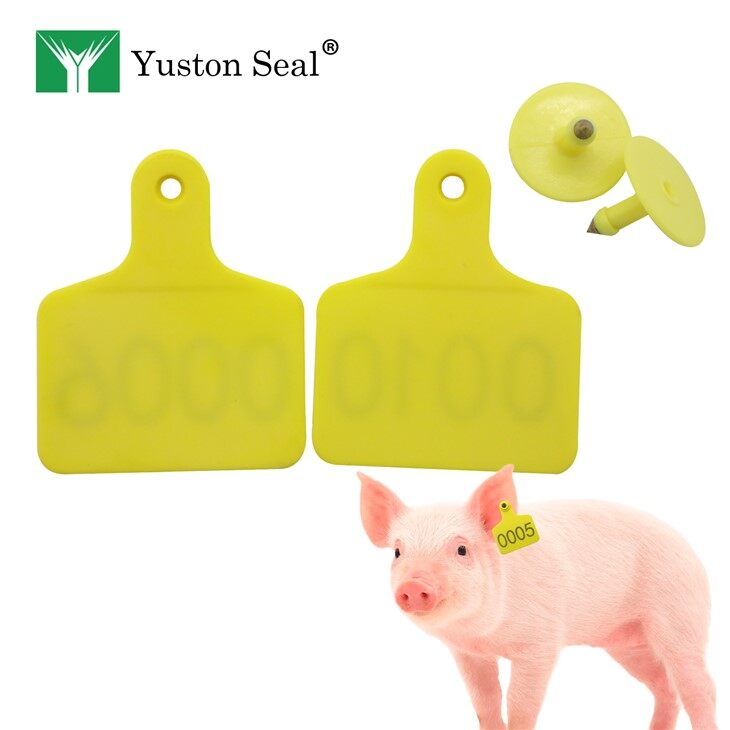
The ear tag is one of the animal identification methods. It is used to prove the identity of livestock and is a mark carrying the individual information of the livestock, attached to the ear of the animal.
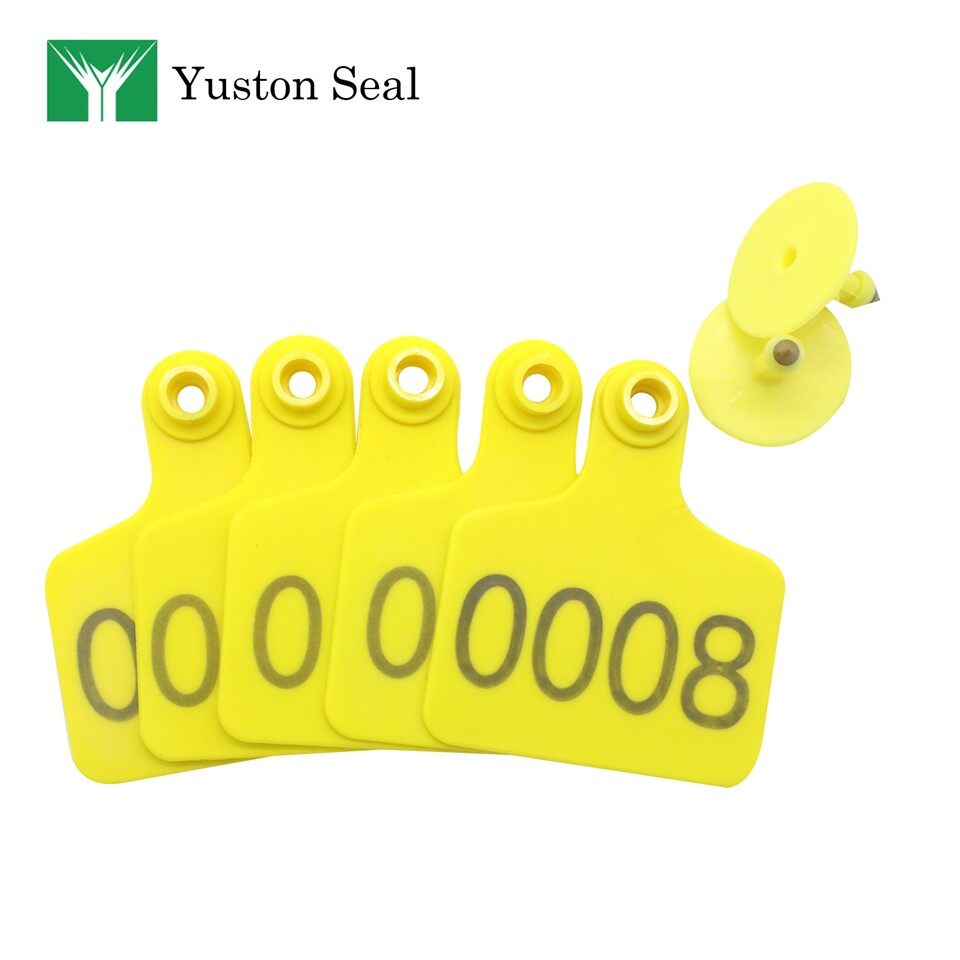
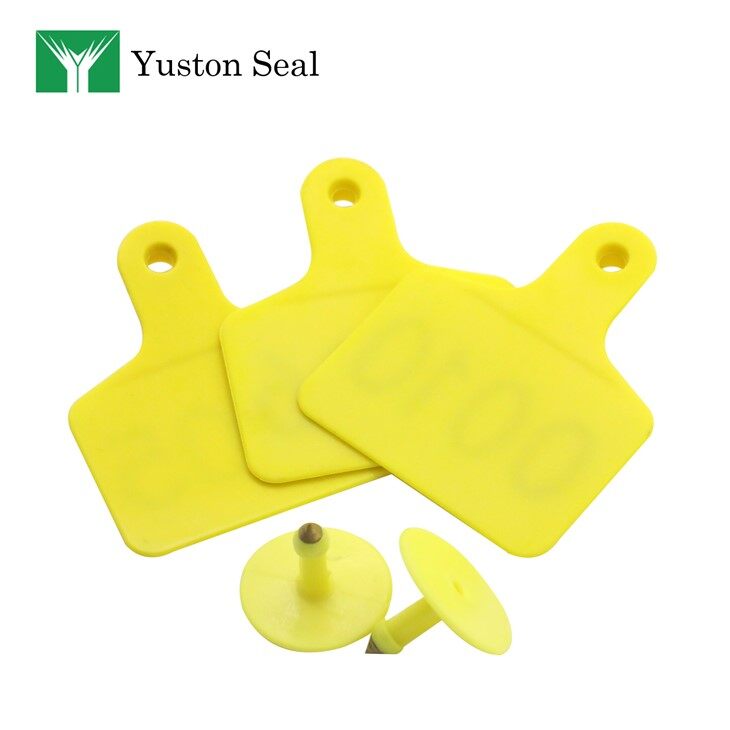
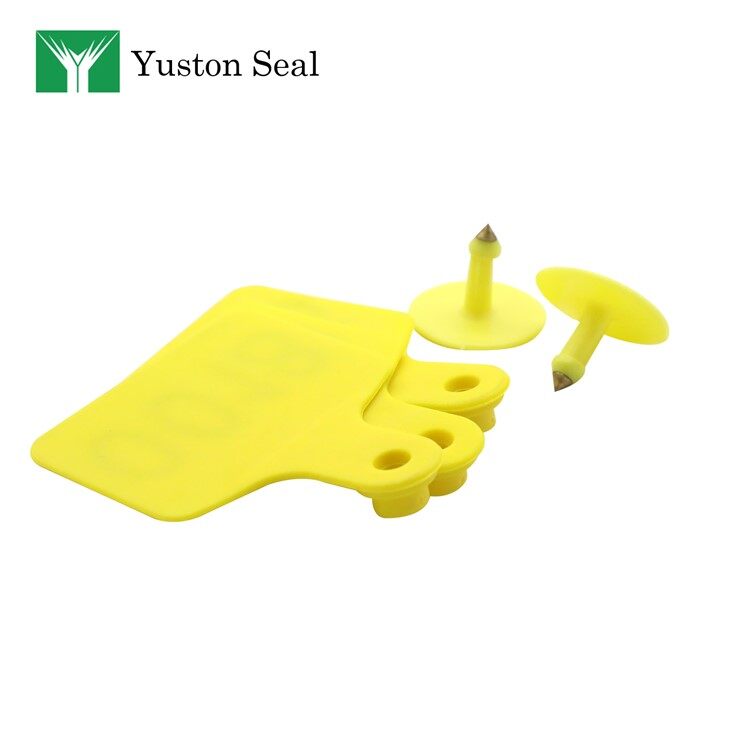
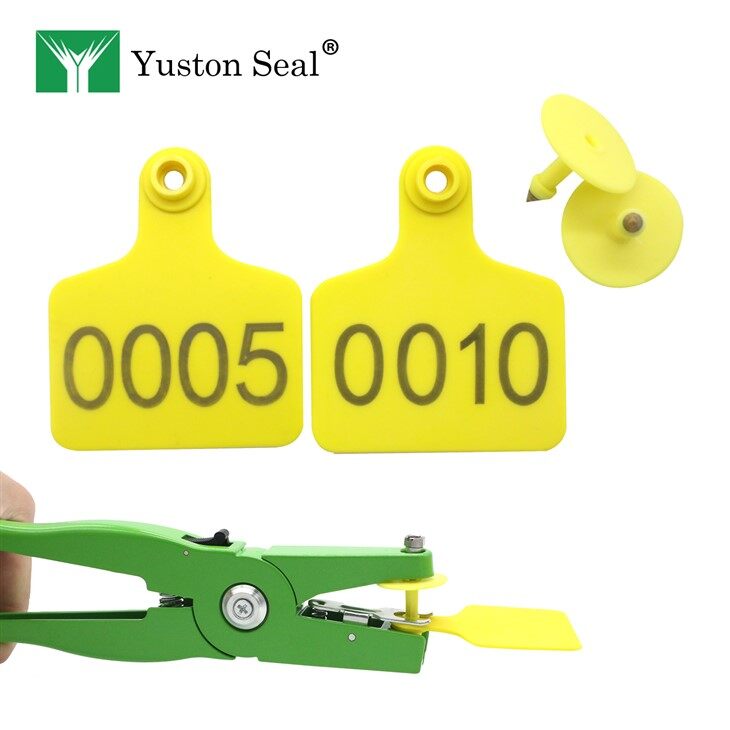
The ear tag consists of two parts: the main tag and the auxiliary tag. The main tag is composed of the main tag surface, the tag neck, and the tag head. The back of the main tag surface is connected to the tag neck. When using it, the tag head penetrates the animal's ear, embeds the auxiliary tag, fixes the tag, and the tag neck remains in the perforation. The tag surface records the encoded information.
By material classification
they can be divided into plastic ear tags, metal ear tags, etc. Plastic ear tags have the advantages of light weight, low cost, and resistance to rust; metal ear tags are more sturdy and durable, and less prone to damage.
By function classification: they can be divided into ordinary ear tags and electronic ear tags. Ordinary ear tags mainly rely on manual visual recognition, with simple numbers and other information engraved on them; electronic ear tags use RFID technology, with built-in chips and antennas, and the encoded information is stored in the chip, featuring non-contact, long-distance, automatic identification of moving objects, and readability and writability.
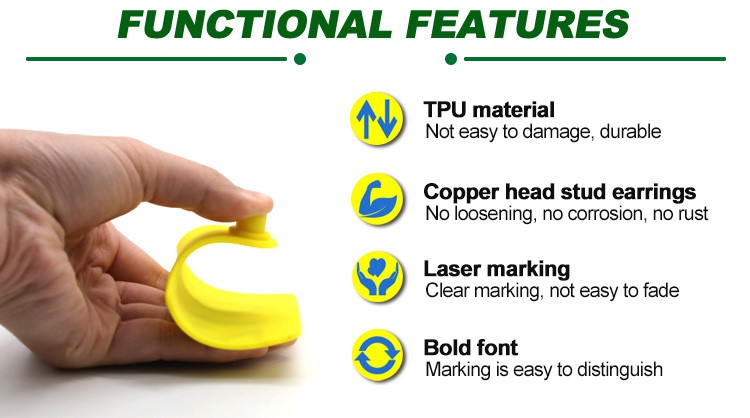
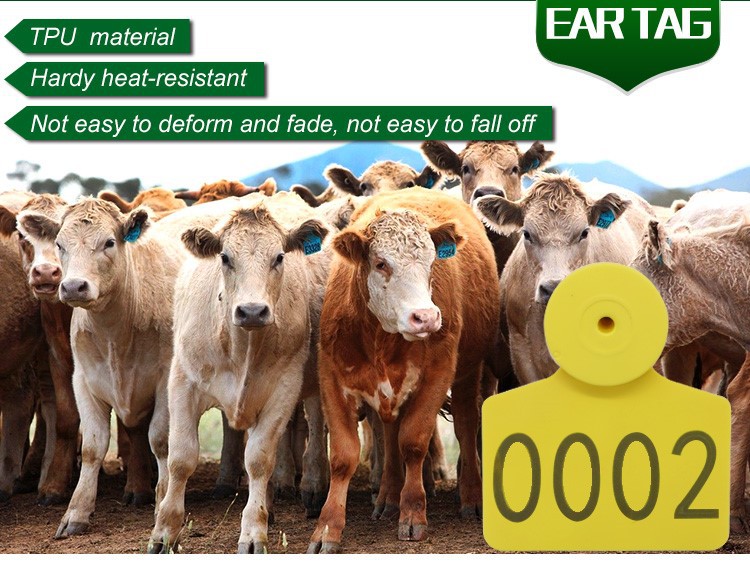
1. Our ear tag using TPU raw materials, non-toxic, no smell, no irritation, no pollution, corrosion resistance; Good anti-ultraviolet and antioxidant performance, strong anti-aging performance, long service life of the product;
2. High temperature resistance up to 60 degrees Celsius, cold resistance up to minus 40 degrees Celsius, product flexibility and binding force unchanged;
3. All metal head parts are made of high-quality alloy, which can effectively prevent aging, and are disinfected by professional medicine, which will not cause infection of livestock marking site after marking;
4. Both male and female marks are relatively thicker, further increase the toughness of the product, improve the bonding force, can effectively prevent due to wear time is too long, the perforation increases after the phenomenon of demarking;
5. The product adds a special color masterbatch, to ensure long-term bright color does not fade.
Wearing: When wearing the ear tag, you need to first select the appropriate position, usually in the middle of the ear, avoiding major blood vessels. Then, disinfect the ear tag clamp and the ear. Insert it once to reduce the stress on the animal. Observe for a few days after wearing to avoid infection.
Management: Livestock farms (owners) need to carry out the application and information recording of livestock ear tags in accordance with regulations, and promptly apply new ear tags to livestock whose tags have fallen off or are severely worn or damaged to ensure that the ear tags of the livestock to be sold meet the requirements. Do not use counterfeit or altered livestock ear tags.

FAQ


