


Nylon Cable Tie
Why choose us
Our Product
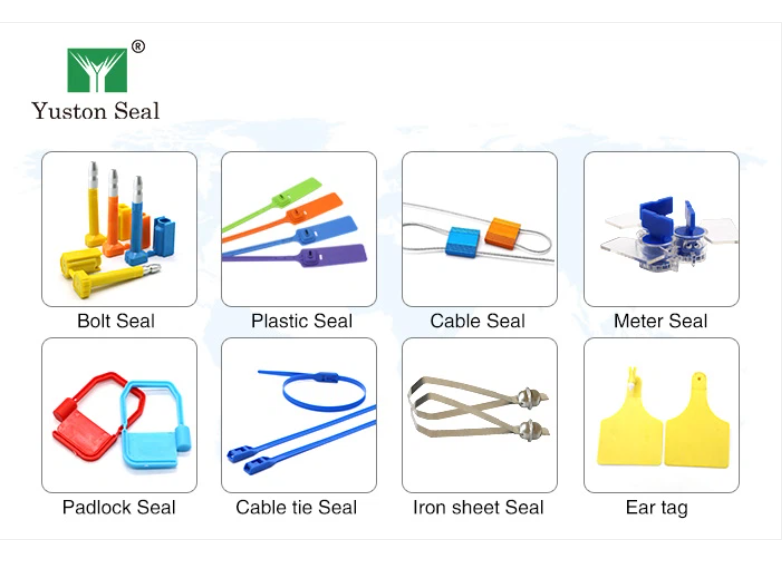
Our main bolt seal, plastic seal, cable seal,meter seal, ear tag, cable tie, padlock seal, container lock, metal belt seal we can provide free samples, product color and size are customized, manufacturers direct sales of a variety of models are in stock.
Advanced Equipment
Our company has professional production of more than 360 blockade equipment, covering an area of more than 10,000 square acres, become a comprehensive and capable enterprise integrating R&D, design, production and sales.
Application
Products are widely used in customs, ports, logistics, postal services, supermarkets, banks, oil companies, security, electricity, animal husbandry and other industries.
Quality Control
We have professional personnel to monitor the production process, inspect the products and ensure that the final product meets the required quality level standards, guidelines and specifications.
What is Nylon Cable Tie
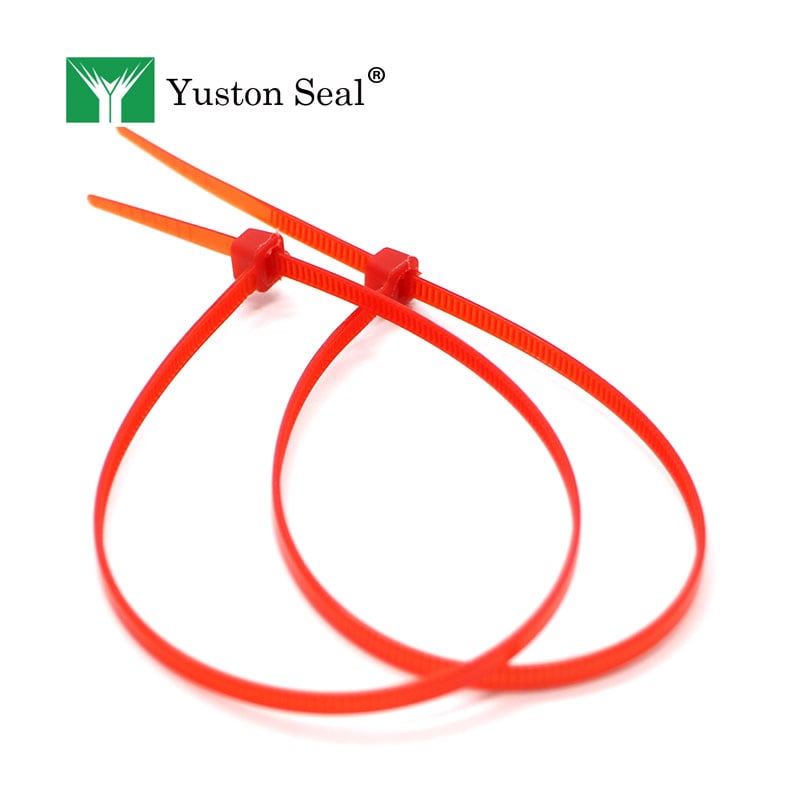
Nylon cable ties – also known as Ty-Rap – are a synthetic polymer made of polyamides. They are a thermoplastic material that may be mixed with other chemicals to achieve desired variations. Each variation is engineered to cater to specific demands. But generally, cable ties are ergonomic, strong, and easy to use.


Nylon cable ties features
Material
Crafted from durable nylon plastic, they offer flexibility and resilience against environmental factors.
Design
Equipped with a serrated strap and a self-locking mechanism, they ensure secure fastening without the risk of slipping.
Variety
Available in a range of lengths, strengths, and colors, nylon cable ties cater to diverse needs, from light-duty bundling to heavy-duty applications.
Nylon cable ties Functionality

Secure Fastening

Organization

Versatility
The Difference Between Nylon Cable Ties and PVC Cable Ties
Anti-Aging Ability
The primary difference between nylon cable ties and PVC cable ties lies in their anti-aging capabilities. Over time, PVC cable ties can age, leading to surface deterioration and exposing the internal iron wire, which can damage objects. This poses particular dangers when used with electric wires and appliances, as it creates a risk of electrical conduction. In contrast, nylon cable ties have excellent anti-aging properties and insulation, helping to delay deterioration and prevent accidents.
Corrosion Resistance
Self-locking nylon cable ties, made from PA66 material, have superior corrosion resistance. PVC cable ties, due to their lower resistance, can rot or weather over time, negatively affecting the bound objects. Nylon cable ties maintain their integrity and can be used effectively in both domestic and industrial settings.
Operability
Traditional PVC cable ties can be cumbersome to use, making them difficult for workers to handle efficiently, which can lead to higher labor costs. Nylon cable ties are easier to use, increasing operational efficiency for enterprises.
Tensile Strength
Nylon cable ties are sturdy and reliable, boasting high tensile strength, impact resistance, and wear resistance. This durability effectively extends their service life. In practical applications, they are less likely to break, making them an economical choice for contemporary users.
Environmental Impact
Traditional PVC materials can pollute the environment and do not align with modern green development goals. In contrast, nylon cable ties made from PA66 are more environmentally friendly.
The quality identification of nylon cable ties
By observing the appearance of the plastic nylon cable tie. For a good quality product, the appearance and color are very uniform, the appearance is good in gloss, and no impurities are embedded in it. As for the poor quality cable ties, there are many bubbles, impurities, nicks and scorching in the product.
Observe the occlusal teeth of the cable tie to see if they are neat and tidy, and scratch with your fingernail to see if they are deformed. For the occlusal teeth that are easily deformed and irregular, the binding of the items is not firm, and the occlusal teeth of good quality cable tie are neat and not easy to deform.
Check the product manual to see what material it is made of. For some inferior materials, their own characteristics are extremely bad, easy to break, easy to age and short in service life.
After testing the endurance of the plastic cable tie, you can pull it slightly, but not very much. Excessive force is also very easy to break, and the endurance of plastic ties of different specifications is also different, so it depends on the actual situation. If you pull it off at random, then the product must be unqualified.
See whether the product brand is from a famous brand, and the quality of the famous brand is still guaranteed.
Check whether the product has a quality certification trademark. For qualified products, they have passed the inspection of the Quality Supervision Bureau.
How to Tell the Quality of a Nylon Cable Tie
Inspect the Raw Materials
Nylon cable ties are typically made from PA (Polyamide), PP (Polypropylene), PVC (Polyvinyl Chloride), or PE (Polyethylene). PA materials are classified into types such as PA6, PA66, PA12, and PA1010, with PA66 being the most widely used and popular.
Some nylon cable ties on the market are made from PA6 and PE. Because the raw materials for PA6 and PE are cheaper than those for PA66, many products are made from these materials to reduce costs. However, ties made from PA6 and PE tend to be more prone to breaking, aging, and lack durability. In contrast, PA66 cable ties are much more durable.
Inspect the Appearance
Examine the internal serrations of the tie to ensure they are neat. If the serrations are easily deformed or irregularly arranged, it may result in loose binding.
High-quality ties will have an even appearance and color, with no visible impurities inside. Defective products, on the other hand, may contain bubbles, burrs, oil stains, and other impurities.
Inspect the Functionality
Before using, check for broken or sliding serrations and poor threading. The most important test is the tensile strength of the tie. Different specifications of cable ties have varying tensile values based on their thickness and width. Any product that does not meet the standard tensile values can be categorized as defective. Please refer to the table below for details.
How do Nylon Cable Ties operate?
A cable tie has a pointed tip and ridges or serrations on one end (like a gear rack). A ratchet is located inside a square hole on the tie's opposite end. The pointed end forms a loop that can be tightened and self-locks when it is inserted through the square head and past the ratchet without being able to be pulled back.
Widely Applicable Nylon Cable Ties
Origin and Structure
Nylon cable ties were first developed by American companies in the 1950s. They are made of nylon material and feature a jagged structure. This design allows the nylon cable tie to pass through one end to form an adjustable loop, enabling flexible tightening according to different needs.
Household Applications
In everyday life, nylon cable ties are practical organizational tools. They can be used to bundle wires and organize messy cables, secure items that are rarely used to save space, and fix objects to walls or other surfaces to enhance space utilization. Whether you’re tying up garden plants or organizing your desk, nylon cable ties help you do more with less.
Industrial Applications
Nylon cable ties are widely used in the industrial sector. They secure and bundle cables, pipes, and other equipment, keeping facilities neat and organized. In the automotive industry, nylon cable ties help secure vehicle components for added support and protection. In aerospace, they are essential for binding and fixing cables and pipelines in spacecraft, ensuring the safe operation of equipment.
Emergency Rescue
The multifunctional use of nylon cable ties extends beyond daily life and industrial applications; they also play a vital role in emergency rescue. During outdoor adventures or camping, nylon cable ties can serve as temporary bandages to secure wounds and help control bleeding. Additionally, they can be used for quick equipment repairs or to construct simple shelters, providing essential support for survival.
Environmental Protection and Reuse
Although nylon cable ties have a long lifespan, they can also be reused to support environmental protection. During use, monitor the condition of the nylon cable ties. If they remain undamaged, they can be reused; if they need replacement, sort and recycle them to contribute to environmental efforts.
Creative Handicrafts
Beyond their practical uses, nylon cable ties can also be transformed into creative crafts. Let your imagination run wild and turn them into fun works of art or practical gadgets. For instance, colorful nylon cable ties can be woven into bracelets, necklaces, or phone holders, adding personality and color to your life. Their flexibility makes them easy to bend and shape, allowing for limitless creativity.
Types of Nylon Cable Ties
Nylon cable ties come in various types to cater to different needs:
Standard Nylon Cable Ties
These are the most common type, widely used for bundling cables and wires. They come in various lengths and thicknesses to accommodate different cable sizes.
Heavy-Duty Nylon Cable Ties
Designed to withstand extreme conditions, heavy-duty cable ties are perfect for outdoor and industrial applications. They are highly durable and resistant to UV radiation, making them a top choice for securing objects in harsh environments.
Releasable Nylon Cable Ties
Releasable cable ties offer the advantage of being reusable. You can release and reattach them as needed, which is handy for situations that require periodic adjustments.
Colored Nylon Cable Ties
These come in a variety of colors and are often used for organizational purposes. Different colors help identify and group cables efficiently.
The use of nylon cable ties skills
Choose the right size
The length of nylon cable ties is generally 100-1000mm, the width of 2.5-12mm, according to the actual needs of the right size, too long or too short will affect the use of the effect.
Correct use
Thread the nylon cable ties through the buckle, pull tight, then cut off the excess with scissors or special scissors. Be careful not to tighten too much so as not to damage the attached items.
Storage method
Nylon cable ties should be stored in a cool and dry place, away from direct sunlight and high temperatures, and avoid excessive bending and twisting.
Proper use
Nylon cable ties are designed for single use and should be removed and disposed of in a timely manner after use. Pay attention to the use process to avoid damage to its material, avoid use in high temperature, high pressure and corrosive environment.
Nylon cable ties in the process of use need to pay attention to the problem
1. Nylon cable ties preservation environment, the most ideal to maintain at about twenty-three degrees Celsius, and its humidity is best controlled at about 50%, this is a point that requires more attention.
2. Manipulate the use of nylon cable ties, the use of tightening tension, can not exceed the nylon tie tension, otherwise there will be a break situation.
3. When using nylon cable ties, the diameter of the bound object circle should be smaller than the diameter of the nylon ties circle, and the remaining length of the band body should be 5-8mm after tying. Nylon ties can maintain excellent mechanical properties and thermal aging resistance in a wide temperature range (-40~120℃).
4. Nylon cable ties use environment, nylon ties in the wet environment, can maintain excellent mechanical properties, nylon ties with moisture absorption, humidity (water content) increases, there is a higher elongation and impact strength, but the tensile strength and rigidity gradually reduced. Pay attention to one point, never put the tie under the sun when in use, otherwise it is easy to cause great impact on the performance of the product. If the working environment needs to be under the sun for a long time, then it is advisable to choose weather-resistant ties, and also to keep away from heat sources.
5. Nylon cable ties have good durability, electrical rated temperature less than 105 degrees does not affect its performance, flame retardant to UL measurement 94V-2 level.
What Should I Pay Attention To When Buying Nylon Cable Ties?
Is the appearance of the cable ties crystal clear?
Does the cable tie look crystal clear? Another statement is the appearance quality of nylon cable ties. As we all know, nylon cable ties are made of PA and 66 engineering plastics. The quality of the material itself is the key factor, but the company’s manufacturing level and strength are also related, because in the production process, there may be bubbles, white silk, less material, etc. , leading to appearance quality factors;
The performance of nylon cable ties is good or bad
The performance of nylon cable ties directly affects the use of guests. Nylon cable ties are easy to break, the card is not tight, and it is brittle. Does this make a big difference to usage? These are unacceptable” but sometimes our own product itself is of good quality; but during the customer’s use, there will be problems; this may have a lot to do with how the customer is used; for example, if the tension is exceeded, the buckle If the tension is fully reached, there is no problem with the lace.
Our Factory
Shandong Yuston New Material Co., Ltd.Quality supplier is located in the beautiful coast of Bohai sea - Dezhou, China. It is an integrated and high-level enterprise with the ability to research and development, design, produce, and sales; and it has professional factory which produce plastic seals, stopcock, cable seals, meter seals, bolt seals, RFID electronic seals, plastic cable seals, containers, and GPS seals. Yutong is an excellent manufacturer and exporter of security seals in China.

FAQ
As one of the leading nylon cable tie manufacturers and suppliers in China, we warmly welcome you to buy high-grade nylon cable tie for sale here from our factory. All our products are with high quality and competitive price.
Self Locking Plastic Ties, Plastic Cable Tie, nylon cable tie