

As a supplier of Plastic Cable Ties, I often get asked whether our products can be used outdoors. This is a crucial question for many customers, especially those in industries such as construction, agriculture, and landscaping, where outdoor applications are common. In this blog post, I'll delve into the factors that determine the suitability of plastic cable ties for outdoor use, the types of cable ties best suited for outdoor environments, and some tips on using them effectively.
Factors Affecting the Outdoor Use of Plastic Cable Ties
UV Resistance
One of the most significant challenges for plastic cable ties used outdoors is exposure to ultraviolet (UV) radiation from the sun. UV rays can break down the molecular structure of plastics over time, causing them to become brittle, crack, and lose their strength. This process, known as UV degradation, can significantly reduce the lifespan of cable ties and compromise their performance.
To combat UV degradation, many manufacturers, including us, offer UV-resistant plastic cable ties. These ties are made from materials that have been formulated with UV stabilizers, which absorb and dissipate UV radiation, preventing it from damaging the plastic. When choosing cable ties for outdoor use, it's essential to look for products that are specifically labeled as UV-resistant. For example, our Self-locking Cable Ties are available in UV-resistant options, ensuring long-lasting performance in outdoor environments.
Temperature Resistance
Outdoor environments can experience a wide range of temperatures, from extreme heat in the summer to freezing cold in the winter. Plastic cable ties need to be able to withstand these temperature fluctuations without losing their flexibility or strength.
Most plastic cable ties are made from nylon, which has good temperature resistance properties. Nylon cable ties can typically withstand temperatures ranging from -40°C to 85°C (-40°F to 185°F), making them suitable for a variety of outdoor applications. However, in extremely high or low temperatures, the performance of nylon cable ties may be affected. For example, at very low temperatures, nylon can become more brittle, increasing the risk of breakage.
If you need cable ties for use in extreme temperature conditions, it's advisable to choose products that are specifically designed for high or low-temperature applications. Some manufacturers offer cable ties made from specialized materials, such as fluoropolymers, which have excellent temperature resistance properties and can withstand temperatures up to 260°C (500°F).
Chemical Resistance
Outdoor environments may expose cable ties to various chemicals, such as pesticides, fertilizers, solvents, and cleaning agents. These chemicals can react with the plastic material of the cable ties, causing them to degrade, swell, or lose their strength.
When selecting cable ties for outdoor use, it's important to consider the chemical environment in which they will be used. If the cable ties will be exposed to chemicals, choose products that are resistant to the specific chemicals involved. For example, our Plastic Cable Tie products are available in different materials, some of which offer good chemical resistance properties.
Moisture and Corrosion Resistance
Outdoor environments are often exposed to moisture, whether it's from rain, snow, humidity, or standing water. Moisture can cause corrosion and rust on metal components, and it can also affect the performance of plastic cable ties.
Plastic cable ties are generally resistant to moisture and corrosion, making them a good choice for outdoor applications. However, if the cable ties will be submerged in water for extended periods or exposed to high levels of humidity, it's important to choose products that are specifically designed for wet environments. Some manufacturers offer cable ties with a waterproof coating or made from materials that are highly resistant to moisture.
Types of Plastic Cable Ties Suitable for Outdoor Use
Nylon Cable Ties
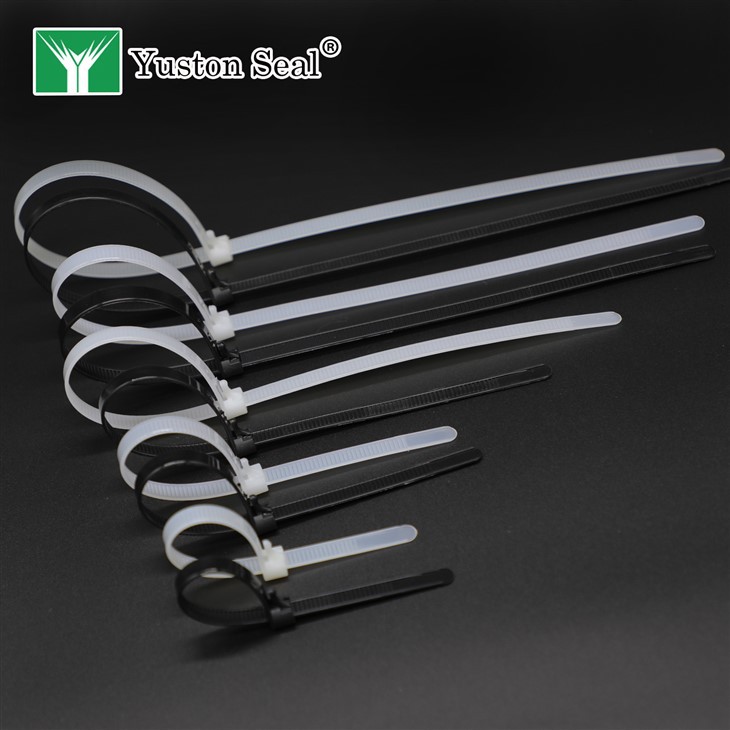
Nylon cable ties are the most commonly used type of plastic cable ties, and they are suitable for a wide range of outdoor applications. Nylon is a strong, durable, and flexible material that offers good UV, temperature, chemical, and moisture resistance properties.
Our Plastic Cable Tie products are made from high-quality nylon and are available in various sizes and colors. They are easy to use, with a self-locking mechanism that ensures a secure and tight hold. Nylon cable ties are ideal for bundling cables, securing hoses, and fastening objects in outdoor settings.
Stainless Steel Cable Ties
Stainless steel cable ties are another option for outdoor use, especially in applications where high strength and corrosion resistance are required. Stainless steel cable ties are made from a corrosion-resistant alloy, which makes them suitable for use in harsh outdoor environments, such as marine applications, chemical plants, and industrial settings.
Stainless steel cable ties are more expensive than nylon cable ties, but they offer superior strength and durability. They can withstand high temperatures, extreme weather conditions, and exposure to chemicals and moisture. Our stainless steel cable ties are available in different sizes and configurations, and they are designed to provide a secure and long-lasting solution for outdoor applications.
Small Plastic Cable Ties
For outdoor applications that require a more delicate touch, Small Plastic Cable Ties are a great option. These ties are typically smaller in size and have a lower tensile strength than standard cable ties, making them suitable for bundling small cables, wires, and lightweight objects.
Small plastic cable ties are often used in outdoor lighting installations, landscaping projects, and electronic devices. They are easy to handle and can be used in tight spaces where larger cable ties may not fit. Our small plastic cable ties are available in a variety of colors, allowing you to choose the one that best matches your application.
Tips for Using Plastic Cable Ties Outdoors
Choose the Right Size and Strength
When selecting plastic cable ties for outdoor use, it's important to choose the right size and strength for your application. The size of the cable tie will depend on the diameter of the cables or objects you need to bundle, while the strength will depend on the weight and tension requirements.
Make sure to choose cable ties that are rated for the maximum load and tension that they will be subjected to. Using cable ties that are too small or too weak can result in breakage or failure, which can be dangerous and costly.
Install the Cable Ties Correctly
Proper installation is crucial for the performance and longevity of plastic cable ties. When installing cable ties, make sure to follow the manufacturer's instructions carefully. Use a cable tie tool to tighten the ties securely, but avoid over-tightening, as this can damage the cable tie and the objects being bundled.
Leave a small amount of tail on the cable tie after tightening to allow for any expansion or contraction of the cables or objects. This will prevent the cable tie from becoming too tight and causing damage.
Inspect the Cable Ties Regularly
Regular inspection of plastic cable ties is essential to ensure their continued performance and safety. Check the cable ties for signs of wear, damage, or degradation, such as cracking, brittleness, or discoloration. If you notice any problems, replace the cable ties immediately.
In addition to visual inspection, it's also a good idea to test the strength of the cable ties periodically. You can do this by applying a small amount of tension to the cable tie and checking for any signs of weakness or failure.
Store the Cable Ties Properly
Proper storage of plastic cable ties is important to maintain their quality and performance. Store the cable ties in a cool, dry place away from direct sunlight and heat sources. Avoid storing the cable ties in areas where they may be exposed to chemicals, moisture, or extreme temperatures.
If you need to store the cable ties for an extended period, make sure to keep them in their original packaging or a sealed container to protect them from dust, dirt, and other contaminants.
Conclusion
In conclusion, plastic cable ties can be used outdoors, but it's important to choose the right type of cable tie for your application and to take the necessary precautions to ensure their long-lasting performance. By considering factors such as UV resistance, temperature resistance, chemical resistance, and moisture resistance, you can select cable ties that are suitable for the specific outdoor environment in which they will be used.
As a supplier of Plastic Cable Tie products, we are committed to providing high-quality, reliable, and cost-effective solutions for outdoor applications. If you have any questions or need assistance in choosing the right cable ties for your project, please don't hesitate to contact us. We look forward to working with you and helping you find the perfect cable tie solution for your needs.
References
- "Plastic Materials and Their Properties" by John Murphy
- "Cable Tie Handbook" by Cable Tie Manufacturers Association
- "Outdoor Electrical Installations" by National Electrical Code