

Do metal cable ties expand or contract with temperature changes? This is a question that often arises in industries where precision and reliability are crucial, especially when it comes to ensuring the stability of cable management systems. As a Metal Cable Ties supplier, I've seen firsthand the importance of understanding how these essential components react to different environmental conditions. In this blog, we'll delve into the science behind the thermal behavior of metal cable ties and explore their implications for various applications.
The Basics of Thermal Expansion
Before we discuss specific cable tie materials, let's review the fundamental concept of thermal expansion. All materials expand or contract when their temperature changes in accordance with a well - known physical principle. This change is described by the coefficient of thermal expansion (CTE), which is defined as the fractional change in length per degree change in temperature.
Mathematically, the change in length ((\Delta L)) of a material can be calculated using the formula (\Delta L = L_0\times\alpha\times\Delta T), where (L_0) is the initial length of the object, (\alpha) is the coefficient of thermal expansion, and (\Delta T) is the change in temperature.
Metal Cable Ties: Thermal Behavior
Most metal cable ties are made from materials like stainless steel. Stainless steel is a popular choice due to its excellent corrosion resistance, high strength, and durability. When it comes to thermal expansion, stainless steel, like other metals, will expand when heated and contract when cooled.
The coefficient of thermal expansion for stainless steel is approximately (10.8\times10^{-6}/^{\circ}C) to (17.3\times10^{-6}/^{\circ}C) depending on the specific grade. This means for every degree Celsius increase in temperature, a piece of stainless steel will increase in length by about (10.8) to (17.3) millionths of its original length.
For example, if you have a stainless - steel cable tie that is 100 mm long ((L_0 = 100) mm), and the temperature increases by (50^{\circ}C) ((\Delta T=50^{\circ}C)) with an (\alpha = 13\times10^{-6}/^{\circ}C), then (\Delta L = 100\times13\times10^{-6}\times50=0.065) mm. This may seem like a small change, but in applications where precision is key, it can have significant implications.
Impact on Applications
Electrical and Electronics
In electrical and electronics installations, cable management is essential for maintaining proper functionality and safety. Metal cable ties are used to secure wires and cables neatly. Temperature changes can cause the cable ties to expand or contract, potentially loosening or tightening the grip on the cables.
If the cable ties expand due to high temperatures, they may loosen their hold on the cables. This can lead to wires moving around, causing short - circuits or interference in sensitive electronic equipment. On the other hand, if they contract in cold temperatures, there is a risk of overtightening, which could damage the cables or the insulation.
Automotive and Aerospace
In the automotive and aerospace industries, where components are exposed to a wide range of temperatures, the thermal behavior of metal cable ties is even more critical. These cable ties are used to secure wiring harnesses, fluid lines, and other crucial components.
A loose cable tie in an engine compartment (which can reach high temperatures) could allow cables to vibrate and potentially get damaged, leading to malfunctions. In aerospace applications, extreme temperature variations during flight can also affect the performance of metal cable ties, making it necessary to consider their thermal expansion characteristics when designing the cable management system.
Our Product Range to Address These Challenges
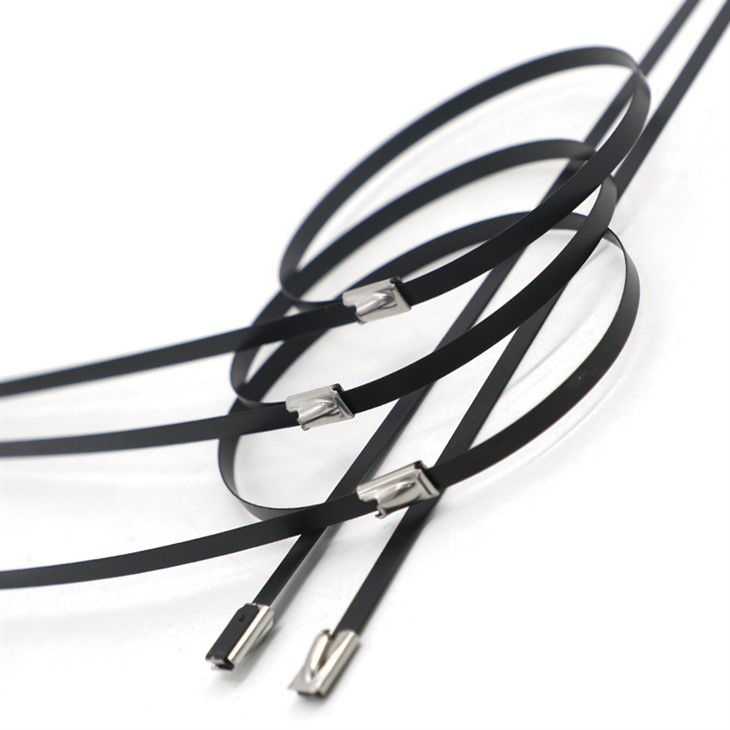
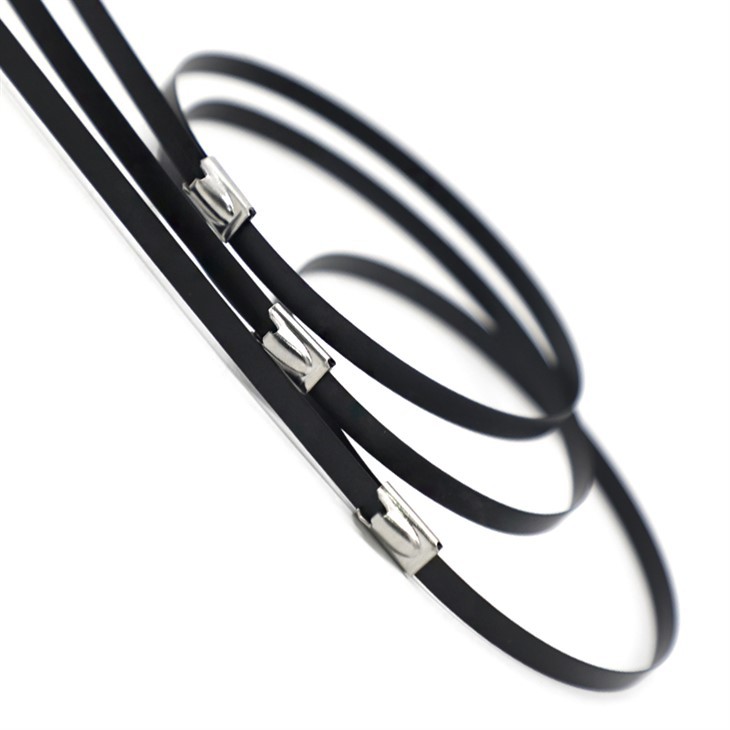
As a Metal Cable Ties supplier, we understand the importance of providing products that can withstand temperature variations. Our Metal Cable Ties are made from high - quality stainless steel with consistent thermal expansion properties. We also offer Black Stainless Steel Zip Ties, which not only have the same reliable thermal behavior but also provide a low - visibility option for applications where aesthetics matter.
For more specialized applications, our Stainless Steel Locking Wire Ties offer an extra level of security. These ties are designed to resist loosening due to temperature - induced expansion and contraction, ensuring a long - term reliable hold on cables and other items.
Choosing the Right Metal Cable Ties for Temperature - Sensitive Applications
When selecting metal cable ties for applications where temperature changes are a concern, here are some factors to consider:
- Coefficient of Thermal Expansion: Look for cable ties made from materials with a low coefficient of thermal expansion if possible. This will minimize the amount of expansion and contraction with temperature changes.
- Tensile Strength: Cables need to maintain their strength even as they expand and contract. High - quality metal cable ties with adequate tensile strength can better withstand the stresses associated with thermal cycling.
- Design Features: Some cable ties have features such as locking mechanisms that help to maintain a tight hold even when the tie expands and contracts. Consider these design features based on your specific application requirements.
Final Thoughts and Call to Action
The thermal expansion and contraction of metal cable ties are important factors that can significantly impact their performance in various applications. Whether you're in the electrical, automotive, aeronautic, or any other industry that relies on cable management, understanding these thermal behaviors is crucial.
At our company, we are committed to providing high - quality metal cable ties that meet all your needs, including those related to temperature - sensitive environments. We stand behind the performance of our products and are ready to offer technical support to help you choose the right cable ties for your specific application.
If you are interested in our Metal Cable Ties, Black Stainless Steel Zip Ties, or Stainless Steel Locking Wire Ties, we encourage you to reach out and discuss your requirements. Let's work together to ensure your cable management systems are reliable, efficient, and able to withstand the challenges of temperature variations.
References
- "Thermal Expansion of Materials" - Physics textbook on materials science
- Stainless steel material data sheets from reliable metal manufacturers.