

What is the Torsion Resistance of a Metal Strap Seal?
As a trusted supplier of metal strap seals, I've witnessed firsthand the critical role these components play in various industries. Metal strap seals are used in a wide range of applications, from securing shipping containers to safeguarding sensitive equipment. One of the most important properties of these seals is their torsion resistance. In this blog post, I'll delve into what torsion resistance means for metal strap seals, why it matters, and how it impacts their performance.
Understanding Torsion Resistance
Torsion resistance refers to a material's ability to withstand twisting forces without undergoing permanent deformation or failure. When a metal strap seal is subjected to torsion, it experiences a rotational force that tries to twist the seal along its axis. The torsion resistance of a metal strap seal determines how much of this twisting force it can endure before it loses its integrity and fails to provide the necessary security.
The torsion resistance of a metal strap seal is influenced by several factors, including the material used, the design of the seal, and the manufacturing process. Different metals have different inherent properties that affect their ability to resist torsion. For example, stainless steel is known for its high strength and corrosion resistance, making it a popular choice for metal strap seals that require good torsion resistance. The design of the seal, such as the thickness and width of the strap, also plays a crucial role. A thicker and wider strap generally has higher torsion resistance compared to a thinner and narrower one.
Why Torsion Resistance Matters
Torsion resistance is a vital characteristic for metal strap seals for several reasons. Firstly, in many applications, metal strap seals are exposed to various external forces during transportation and handling. These forces can include vibrations, impacts, and twisting motions. If a seal has poor torsion resistance, it may twist or deform under these forces, compromising its ability to secure the contents effectively. This can lead to unauthorized access, tampering, or loss of goods.
Secondly, torsion resistance is closely related to the durability and longevity of the metal strap seal. A seal with high torsion resistance is less likely to break or fail over time, even when subjected to repeated twisting forces. This means that it can provide reliable security for an extended period, reducing the need for frequent replacements and saving costs in the long run.
In addition, in industries where security is of utmost importance, such as the transportation of high - value goods or sensitive materials, a metal strap seal with high torsion resistance is essential. It acts as a deterrent to potential tampering, as it is more difficult to twist or break the seal without leaving visible signs of damage.
Factors Affecting Torsion Resistance
As mentioned earlier, the material of the metal strap seal is a significant factor in determining its torsion resistance. Metals with high strength and ductility tend to have better torsion resistance. For instance, alloy steels can be formulated to have specific properties that enhance their ability to withstand torsion. These alloys often contain elements such as chromium, nickel, and molybdenum, which improve the strength and toughness of the metal.
The manufacturing process also has a profound impact on torsion resistance. Precision manufacturing techniques ensure that the metal strap seal has uniform thickness and consistent mechanical properties throughout. For example, cold - rolling processes can be used to increase the strength and hardness of the metal, thereby improving its torsion resistance. Heat treatment can also be applied to modify the microstructure of the metal, further enhancing its performance under torsional loads.
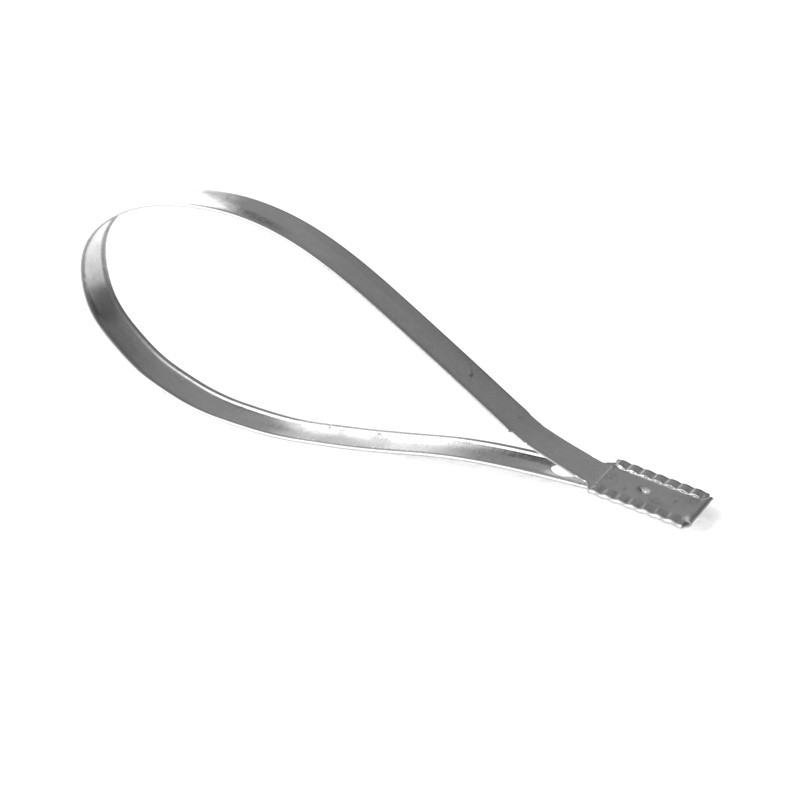
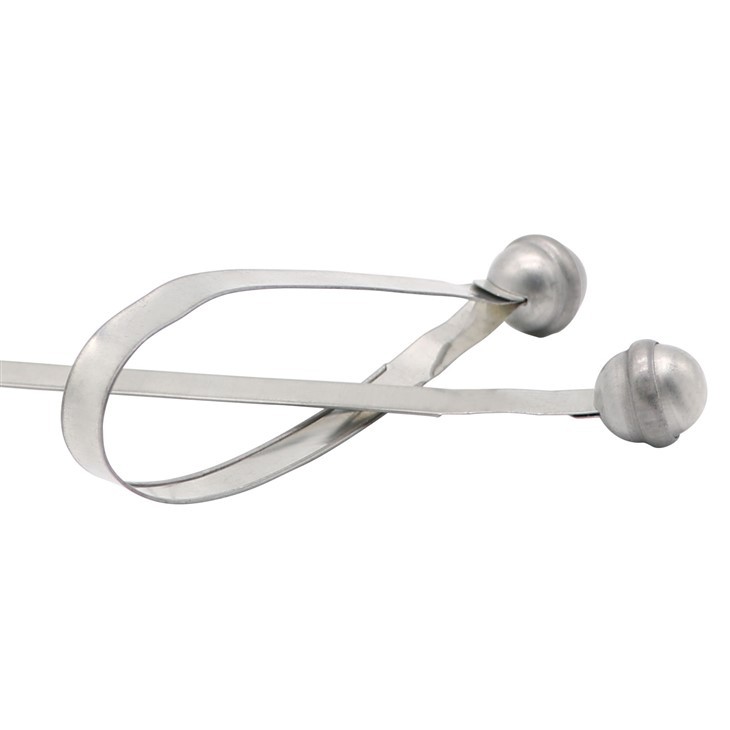
The design of the metal strap seal is another critical factor. Some seals are designed with features that increase their torsion resistance. For example, a seal with a ribbed or corrugated surface may have better torsion resistance compared to a smooth - surfaced one. These features can help distribute the torsional forces more evenly across the seal, reducing the risk of stress concentration and failure.
Measuring Torsion Resistance
There are several methods for measuring the torsion resistance of a metal strap seal. One common approach is the torsion test, where the seal is fixed at one end and a rotational force is applied at the other end. The amount of torque required to cause a certain degree of twist or failure is then measured. This test can provide valuable information about the maximum torsional load that the seal can withstand.
Another method is to use finite element analysis (FEA). FEA is a computer - based simulation technique that can model the behavior of the metal strap seal under torsional loads. By inputting the material properties and geometric dimensions of the seal, FEA can predict how it will deform and stress under different torsion conditions. This allows for the optimization of the seal design to improve its torsion resistance.
Applications and Products
Our company offers a wide range of metal strap seals with excellent torsion resistance. Our Round Head Metal Strap Seal is designed for applications where a high level of security is required. The round head design provides a smooth surface that is difficult to grip and twist, enhancing its torsion resistance. It is commonly used in the transportation of valuable goods, such as electronics and pharmaceuticals.
Our Metal Truck Seals are specifically engineered for use in the trucking industry. These seals are subjected to significant vibrations and twisting forces during transportation. With their robust design and high - quality materials, they offer superior torsion resistance, ensuring the security of the cargo throughout the journey.
The Truck Metal Seal is another product in our lineup that provides excellent torsion resistance. It is designed to withstand the harsh conditions of truck transportation, including rough roads and frequent handling. The seal's construction and material selection make it highly resistant to torsion, providing reliable protection for the contents of the truck.
Conclusion
Torsion resistance is a crucial property for metal strap seals, as it directly impacts their performance, durability, and security. Understanding the factors that affect torsion resistance, such as material, design, and manufacturing process, can help in selecting the right seal for specific applications. At our company, we are committed to providing high - quality metal strap seals with excellent torsion resistance to meet the diverse needs of our customers.
If you are in the market for metal strap seals and have specific requirements regarding torsion resistance or other properties, we invite you to contact us for a detailed discussion. Our team of experts is ready to assist you in finding the best solution for your security needs.
References
- Callister, W. D., & Rethwisch, D. G. (2017). Materials Science and Engineering: An Introduction. Wiley.
- ASM Handbook Committee. (1990). ASM Handbook Volume 1: Properties and Selection: Irons, Steels, and High - Performance Alloys. ASM International.