


Why do many clothes have plastic seals?
1. Anti-theft and anti-swapping (the main functions)
This is the original and most important function of the seal.
Anti-theft: The price tags of many clothes are fixed by this kind of plastic seal. It is designed to be quite sturdy and hard to break by hand. If it is forcibly removed, obvious marks will be left. This greatly increases the difficulty for thieves to directly wear clothes on their bodies or put them in bags and take them away in the shopping mall, as the act of removing seals and price tags would be highly suspicious.
Anti-substitution: Some brands (especially high-end ones) have unique packaging or accessories for their clothing. For instance, an expensive shirt might be equipped with dedicated collar braces, spare buttons, etc., and these items would be fixed to the garment with seals. The existence of the seal ensures that these attachments are complete and prevents them from being taken away by others.
2. Ensure the brand new condition of the goods
Not tried on: Especially on close-fitting clothes (such as underwear, socks, T-shirts), plastic seals are almost standard. It clearly indicates to the customer that this piece of clothing has not been tried on by other customers and is hygienic and brand new.
Unused: For all the clothes, the seal indicates that they were directly delivered from the warehouse or factory to the store and were not worn by the store staff or others as personal items.
3. Brand image and quality assurance
A well-preserved seal can bring consumers a sense of psychological security and trust.
Authenticity guarantee: It becomes a small symbol of the brand's authenticity. Consumers will believe that even brands that handle such small details well will have stricter overall quality control over their products.
Enhancing the unboxing experience: For online shopping, receiving a package with all the seals intact makes people feel that the product is more valuable and the unboxing process is more ceremony-like.
4. Facilitate warehouse and store management
For merchants, seals also offer management conveniences:
Distinguishing between new and old: In the warehouse or the back office of a store, items with seals are clearly new for sale, while those without seals may be returned goods by customers, display items, or items that need to be disposed of.
Simplifying inventory checks: The presence of seals can quickly distinguish the status of goods and simplify inventory check work.
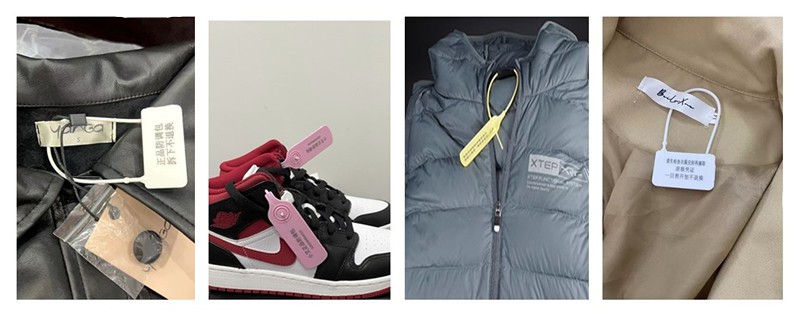
Which clothes are particularly common with plastic seals?
Undergarments: underwear, underpants, socks, T-shirts, base layers, etc.
High-end brand clothing: suits, shirts, dresses, etc., are often used to fix belts, spare buttons, washable labels and other accessories.
Clothing with accessories: such as clothes with detachable fur collars, belts, and special packaging.
Online shopping items: Almost all new clothes purchased online come with seals to ensure they remain in brand new condition during transportation and delivery.It is more necessary and essential for online-purchased clothing to be equipped with plastic seals, which can prevent returns after wearing and protect the interests of merchants.
The impact on the environment and future trends.It is more necessary and essential for online-purchased clothing to be equipped with plastic seals, which can prevent returns after wearing and protect the interests of merchants.
Of course, disposable plastic seals also bring about environmental problems (plastic waste). Therefore, many brands are now also actively exploring more environmentally friendly alternatives, such as:
Use recyclable plastics or biodegradable materials.
Although the plastic seal on clothes may seem unremarkable, it is a multi-functional "safety guard", which not only protects the interests of merchants (preventing theft and substitution), but also safeguards the rights and interests of consumers (ensuring that the products are brand new and hygienic), and at the same time enhances the brand image.